Brazilian Bees & Cocoa: Novel Edible Ingredient Created
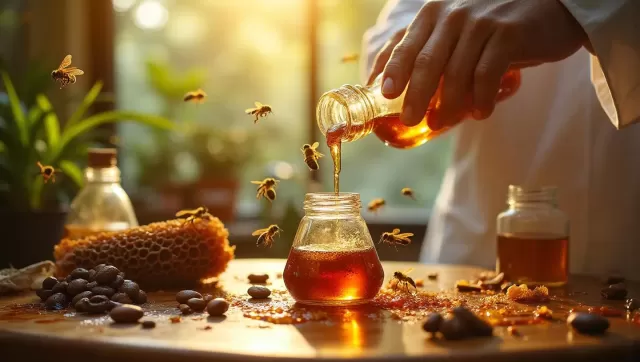
Researchers at UNICAMP, Brazil, have developed an innovative product by combining native bee honey with cocoa bean shells. This novel blend, suitable for consumption or use in food and cosmetics, leverages honey as a natural solvent to extract beneficial compounds like theobromine and caffeine from cocoa shells. The ultrasound-assisted process enhances the honey's antioxidant and anti-inflammatory phenolic content.
The resulting mixture boasts a distinct chocolate flavor, adaptable based on ingredient ratios. Scientists highlight its potential nutritional and cosmetic value, in addition to its appealing taste. UNICAMP is currently seeking commercial partnerships to bring this patented method and product to market.
This initiative promotes sustainable resource utilization by valorizing cocoa shell waste and highlighting the advantages of native Brazilian bee honey, which has higher water content and lower viscosity, making it more effective for extraction than European bee honey. The team experimented with honey from five Brazilian species, noting that the process can be adapted to locally sourced honey varieties due to honey's sensitivity to environmental factors.
The extraction technique employs ultrasound technology, which uses sound waves to efficiently release compounds from the cocoa shells into the honey. This "green chemistry" approach is faster and more environmentally friendly than conventional methods. A sustainability assessment using Path2Green software rated the process positively for its alignment with green chemistry principles, especially for using a local, edible solvent. The researchers envision this product enhancing the offerings of cooperatives and small businesses in the cocoa and native honey sectors.
Future research will investigate how ultrasound treatment impacts honey's microbiology, potentially extending its shelf life and stability by eliminating spoilage microorganisms. The team also plans to explore using native bee honey as a solvent for extracting compounds from other plant residues.