
Britain Needs Strategic Food Reserves for Resilience
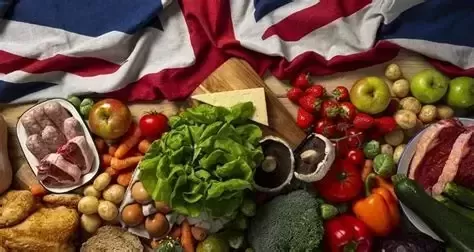
Across the globe, a significant shift in food policy is underway. Numerous nations are reassessing their reliance on global markets and rebuilding strategic food reserves. This stands in stark contrast to the United Kingdom, which continues to depend almost entirely on private sector supply chains and international trade—a stance that could prove increasingly costly.
The convergence of climate disruptions, geopolitical instability, and vulnerable supply chains is driving this global rethink. European countries including Sweden, Germany, and Norway are reconstituting stockpiles that were reduced after the Cold War. Nations like Egypt and Bangladesh are bolstering reserves in response to climate shocks, while populous countries such as Brazil and Indonesia are expanding their programmes to safeguard food for their citizens.
The UK's current strategy lacks any substantial public food reserve system. Official guidance even in extreme scenarios focuses on household-level stockpiling, reflecting a core belief that food security is primarily a matter of price, not physical availability. This approach, shaped by decades of trade liberalisation, assumes markets will always provide.
However, fundamental agricultural markets do not behave like other sectors. Demand for staples is inelastic; people must eat even when costs soar. Production cannot pivot instantly to price signals, and global grain supplies are concentrated in a handful of regions, leaving prices vulnerable to shocks. Furthermore, market dominance by major players and speculative trading can exaggerate price volatility.
Economic research highlights that public buffer stocks can act as critical shock absorbers, smoothing price spikes and guaranteeing physical supply. While critics point to recent dips in global food indices as evidence reserves are unnecessary, this masks a deeper reality: prices remain significantly elevated compared to pre-pandemic levels. In the UK, food inflation continues to outpace the general rate, partly due to cereal price surges linked to ongoing international conflict.
Without such buffers, nations become mere price-takers, importing inflationary pressures. Strategic reserves allow for the accumulation of stocks during periods of low prices, which can then be released to moderate inflation or address supply shortages. Any operational costs during stable periods should be viewed as an investment in national resilience, analogous to maintaining flood defences.
Past experiences offer crucial lessons. China's grain policy from 2008 to 2016 serves as a cautionary tale where reserves were used for indefinite price support, leading to massive spoilage. India, facing similar pressures, largely avoided this pitfall by implementing stock limits and ensuring regular rotation of grain. Their success demonstrates that buffers must function as insurance policies, not permanent market interventions.
As a post-industrial economy, the UK is not immune to commodity volatility. The mounting evidence necessitates a move beyond outdated economic consensus. Building resilience through strategic food reserves is not a rejection of market principles, but a pragmatic acknowledgment of their limitations. Many European neighbours have already embraced this logic. In a world that no longer conforms to textbook assumptions, such foresight is becoming essential.